Protein Rich Foods: Easy Daily List for Qatar
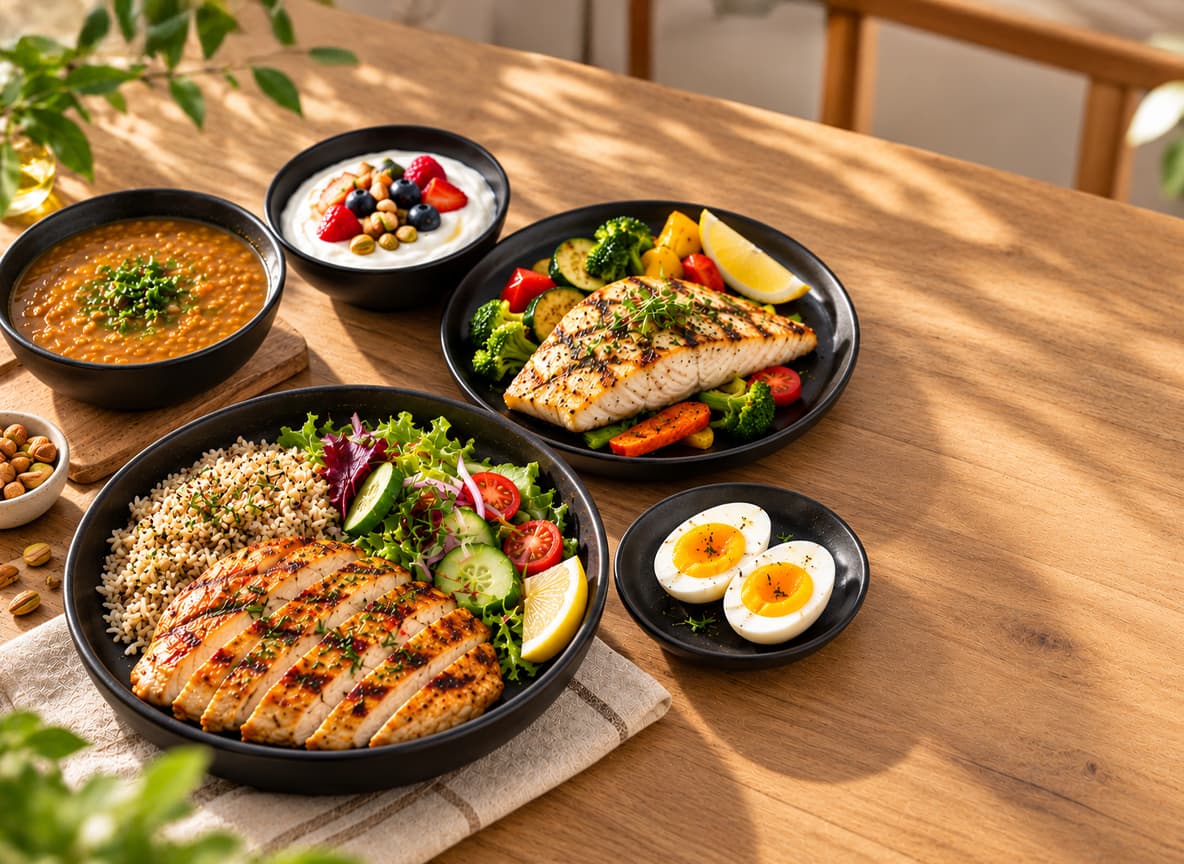
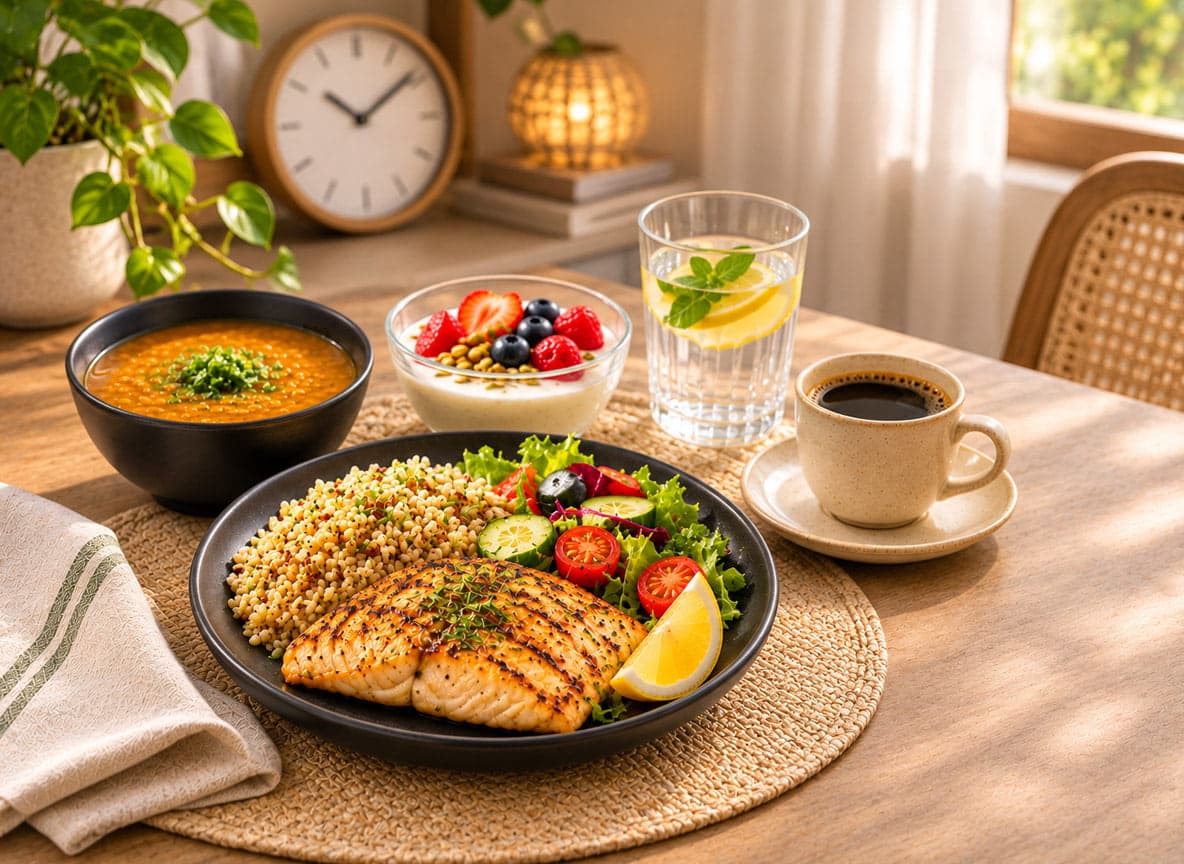
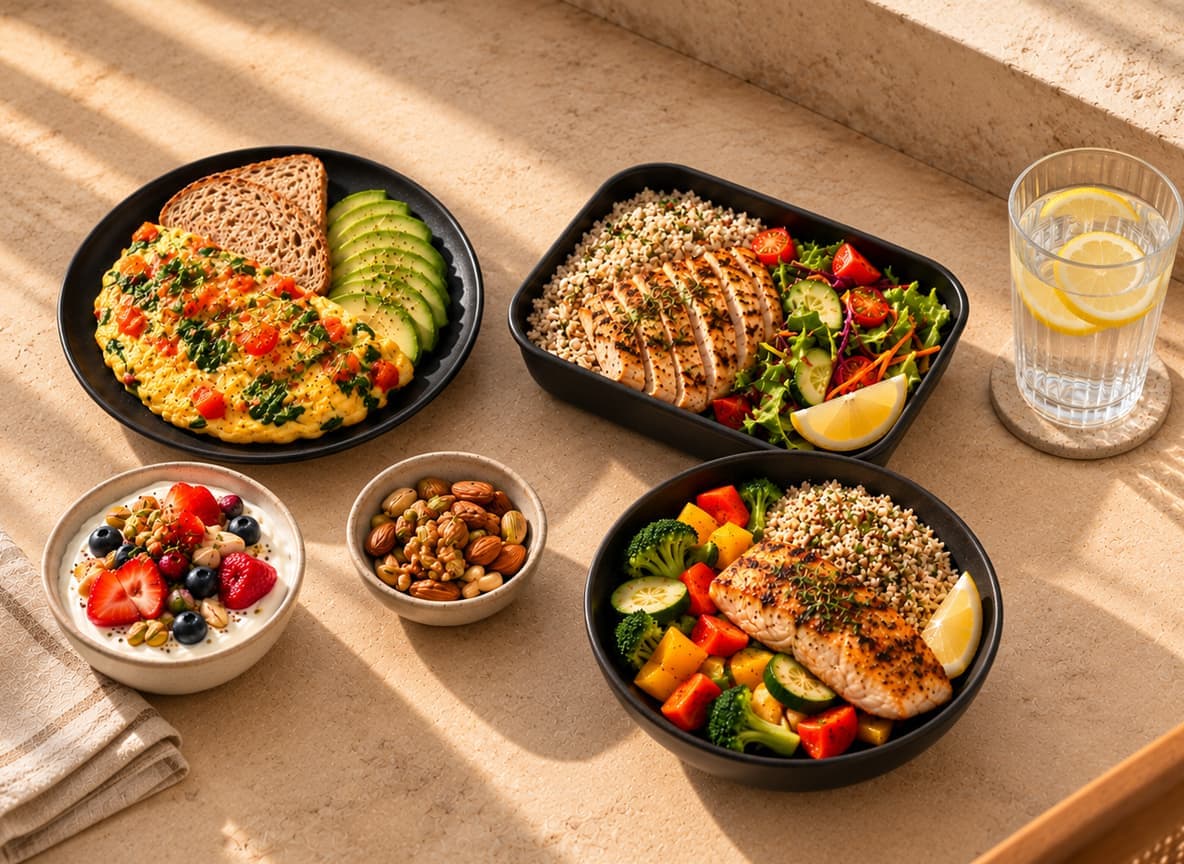
Protein rich foods are foods that give you a large amount of protein per portion: meat, chicken, fish, eggs and dairy such as Greek yogurt, plus plant sources like lentils, beans, tofu, nuts and seeds. Most healthy adults need about 0.75–0.8 g of protein per kg of body weight a day, and mixing these foods across meals usually covers it.
In Qatar, these foods are easy to find, and many are already on the family table, from grilled hammour to lentil soup. This guide lists the protein in common portions, shows how much you need and turns it into a simple day of meals. If your goal is weight loss, also read our guide on how protein helps in weight loss.
What are protein-rich foods?
A protein-rich food is one where protein makes up a large share of a normal portion. Protein is made of amino acids, and nine of them are essential: your body cannot make them, so they must come from food, according to Harvard Health Publishing.
Animal foods (meat, poultry, fish, eggs and dairy), plus soy and quinoa, are complete proteins because they contain all the essential amino acids. Most other plant proteins are incomplete, so vegetarians do best by eating a variety of beans, lentils, nuts, seeds and grains through the day.
Protein rich foods list: grams per portion
The table below uses typical portions and approximate protein values published by the British Heart Foundation (BHF). Values vary by brand, cut and cooking method, so check the food label where you can.
Food | Portion | Protein (approx.) |
|---|---|---|
Meat, chicken or fish | 100 g | 30 g |
Greek yogurt, 0% fat | 150 g | 15 g |
Skyr yogurt | 150 g | 13.5 g |
Baked beans | 200 g | 10 g |
Cheese | 30 g | 8 g |
Cottage cheese | 60 g | 8 g |
Low-fat plain yogurt | 150 g | 8 g |
Tofu | 100 g | 8 g |
Cooked lentils or beans | 100 g | 8 g |
Egg | 1 egg | 7 g |
Milk | 200 ml | 7 g |
Soy drink | 200 ml | 7 g |
Source: British Heart Foundation, "Protein: how much do you need?" (updated August 2026).
How much protein do you need a day?
Most healthy adults need about 0.75 g of protein per kg of body weight a day (BHF), or 0.8 g per kg using the Recommended Dietary Allowance cited by Harvard Health. For a 75 kg adult, that is roughly 56–60 g a day. Some people need more:
Adults over 65: about 1–1.2 g per kg a day, spread as roughly 20–25 g per meal (BHF).
Active people: around 0.75–1.2 g per kg for vigorous activity, and around 1.2–2 g per kg for intense strength or endurance training (BHF).
Pregnancy and breastfeeding: protein needs change, so ask your doctor or dietitian (Harvard Health).
Most people don't need more than 2 g per kg a day, and regularly eating more may strain the kidneys, especially if you already have a kidney condition (BHF, Harvard Health). If you have kidney disease or diabetes, are pregnant or take regular medication, speak to a doctor or registered dietitian before raising your protein intake.
Animal vs plant protein: which sources to choose?
Both count. What matters most is variety and the "package" that comes with the protein: fat, fibre, salt and other nutrients.
Fish and seafood: lean protein, and oily fish such as salmon and mackerel also give omega-3 fats. Hamad Medical Corporation advises eating fish at least twice a week.
Chicken and lean meat: choose skinless chicken and lean cuts, and keep processed meats such as sausages and salami occasional, since red and processed meat are linked to higher risks of heart disease and diabetes (Harvard Health).
Eggs and dairy: eggs, laban, Greek yogurt, cottage cheese and milk are easy protein for breakfast and snacks. Pick lower-fat dairy if you watch saturated fat.
Lentils, beans and chickpeas: protein plus fibre, iron and folate (Harvard Health).
Nuts and seeds: almonds, pistachios, walnuts, pumpkin and chia seeds add protein and healthy fats, but they are high in calories, so keep to a small handful.
Hamad Medical Corporation's healthy diet tips sum it up: eat a variety of protein foods through the week, such as seafood, nuts, beans, pulses, red meat, poultry and eggs.
High protein foods in Qatari and Gulf meals
You don't need special products to eat enough protein in Qatar. Many familiar dishes already contain a good protein source; what matters is the portion and how it is cooked.
Machboos: make the chicken, fish or meat the star and keep the rice portion moderate. A 100 g piece of chicken or fish gives about 30 g of protein.
Harees: wheat slow-cooked with meat or chicken; the meat supplies most of the protein.
Grilled hammour and other local fish: grilling instead of frying keeps the fat lower.
Foul medames and lentil soup (shorbat adas): budget-friendly plant protein, with about 8 g per 100 g of cooked beans or lentils.
Laban and yogurt: an easy protein boost at breakfast or as a snack. Strained Greek yogurt has nearly twice the protein of regular low-fat yogurt per 150 g (BHF).
In the hot summer months, drink enough water with your meals and keep cooked meat, fish and dairy in the fridge.
How to eat enough protein every day
Know your target. Multiply your weight in kg by 0.75–0.8, or use the higher ranges above if you train hard or are over 65.
Add protein to every meal. Aim for a palm-sized portion of chicken, fish, meat, eggs, tofu or lentils at breakfast, lunch and dinner.
Use your snacks. Yogurt, laban, cottage cheese, a boiled egg or a small handful of nuts all help.
Spread it out. Eat protein through the day rather than mostly at dinner; the BHF suggests about 20–25 g per meal for older adults.
Choose lean, mostly unprocessed sources. Grill, bake or steam rather than deep-fry.
Mind the portion. Protein foods still have calories; see our guide to .
Sample high-protein day (about 97 g)
Here is how an active 75 kg adult aiming for about 1.2–1.3 g per kg could reach around 97 g, using the BHF values above. Less active adults can drop a snack or use smaller portions.
Meal | What to eat | Protein (approx.) |
|---|---|---|
Breakfast | 2 eggs with wholegrain bread and tomato | 14 g |
Morning snack | 150 g 0% Greek yogurt with fruit | 15 g |
Lunch | 100 g grilled chicken with rice and salad | 30 g |
Evening snack | 60 g cottage cheese with cucumber | 8 g |
Dinner | 100 g grilled fish with vegetables | 30 g |
Total |
Values cover the main protein foods only; bread, rice and vegetables add a little more. If you eat a plant-based diet, see our tips on .
Protein rich foods made easy with Dieture
If planning and cooking every portion feels like a second job, a meal plan can do the counting for you. Dieture's High Protein plan is designed to support strength, recovery and balanced meals, and Dieture plans can include breakfast, lunch, dinner, a morning snack and an evening snack.
Each plan offers 300+ dishes every month, and the menu changes monthly with new dishes, so eating enough protein doesn't mean the same chicken and rice every day. or .
Key takeaways
Protein rich foods include meat, chicken, fish, eggs, dairy, lentils, beans, tofu, nuts and seeds.
Most adults need about 0.75–0.8 g of protein per kg a day; older adults and people who train hard need more.
100 g of meat, chicken or fish gives about 30 g of protein, one egg about 7 g and 100 g of cooked lentils about 8 g (BHF).
Mix animal and plant sources, eat fish at least twice a week and keep processed meat occasional.
Spread protein across breakfast, lunch, dinner and snacks.
Speak to a doctor or registered dietitian if you have kidney disease or diabetes, or are pregnant.