Intermittent Fasting: A Beginner's Guide

Intermittent fasting is an eating pattern that alternates set hours of eating with set hours of not eating. It focuses on when you eat rather than what you eat. Common schedules are 12:12, 14:10, 16:8 and 5:2. Research suggests it can support short-term weight loss, but it is not better than a balanced, calorie-controlled diet.
Many people in Qatar already know fasting from Ramadan. Intermittent fasting is different: it is a flexible eating schedule and water and other calorie-free drinks are usually allowed during fasting hours. This guide explains how each schedule works, what the evidence says, what to eat in your window and who should not try it.
It is written for healthy adults. If you have a medical condition, are pregnant or take regular medication, speak to a doctor or registered dietitian before changing when you eat.
What is intermittent fasting?
Intermittent fasting (IF) is a way of timing your meals so that all your eating happens within a set window, followed by a longer break with no calories. Time-restricted eating, such as 16:8, limits eating to certain hours every day. Whole-day approaches, such as 5:2, cut calories sharply on two days of the week.
Between meals, your body gradually moves from using energy from food to using stored energy. For most people, though, the main reason IF can lead to weight loss is simpler: a shorter eating window often means eating fewer calories overall.
Intermittent fasting schedules compared
The table below compares the most common schedules, with example times that suit a typical working day in Doha.
Schedule | How it works | Example times | Who it suits |
|---|---|---|---|
12:12 | Fast for 12 hours, eat within 12 hours | Eat from 7:00 to 19:00 | Complete beginners |
14:10 | Fast for 14 hours, eat within 10 hours | Eat from 9:00 to 19:00 | People comfortable with 12:12 |
16:8 | Fast for 16 hours, eat within 8 hours | Eat from 12:00 to 20:00 | Experienced fasters, with medical advice if you have a health condition |
5:2 | Eat normally on 5 days; about 25% of usual calories on 2 non-consecutive days | Lower-calorie days on Sunday and Wednesday | People who prefer a weekly routine |
Longer approaches, such as alternate-day fasting, 24-hour fasts or one meal a day, are harder to sustain and are not a good starting point. According to the British Heart Foundation, a 5:2 fast day means about 500 calories for women and 600 for men. If you follow keto, read our guide to .
Does intermittent fasting help with weight loss?
Intermittent fasting can help with weight loss, but mainly because it helps some people eat less. It does not appear to work better than other ways of cutting calories.
A 2025 review in the British Medical Journal, summarised by the British Heart Foundation, looked at 99 trials with around 6,500 people living with excess weight or obesity. All three types of intermittent fasting and a continuous low-calorie diet led to a small amount of weight loss compared with eating normally. Only alternate-day fasting did slightly better than a continuous low-calorie diet, by about 1.3 kg, and only in trials shorter than 24 weeks.
Harvard's Nutrition Source also notes that research does not consistently show intermittent fasting is superior to continuous low-calorie diets. Mayo Clinic adds that IF may improve some health markers in the short term, but its long-term effects are not clear, and some evidence suggests a 16:8 pattern may raise heart disease risk.
The practical lesson: the best schedule is the one you can keep up while still eating enough protein, fibre and nutrients. If you are not sure how many calories you need, start with our .
How to start intermittent fasting safely
Start gently and build up only if you feel well. Here is a simple four-week approach for healthy adults:
Check first. If you have diabetes, take medication or have any health condition, speak to a doctor or registered dietitian before you begin.
Weeks 1–2: try 12:12. Finish dinner by 19:00 or 20:00 and have breakfast 12 hours later. Avoid late-night snacking.
Week 3: move to 13:11 or 14:10 if you feel comfortable, for example by having breakfast an hour later.
Week 4 onwards: stay at 14:10 if it suits you. There is no need to reach 16:8 to benefit from a regular eating routine.
Eat enough. Fasting is not a reason to miss out on nutrients; plan full, balanced meals for your window.
Listen to your body. Stop and seek medical advice if you feel dizzy, faint, confused or very weak.
What to eat during your eating window
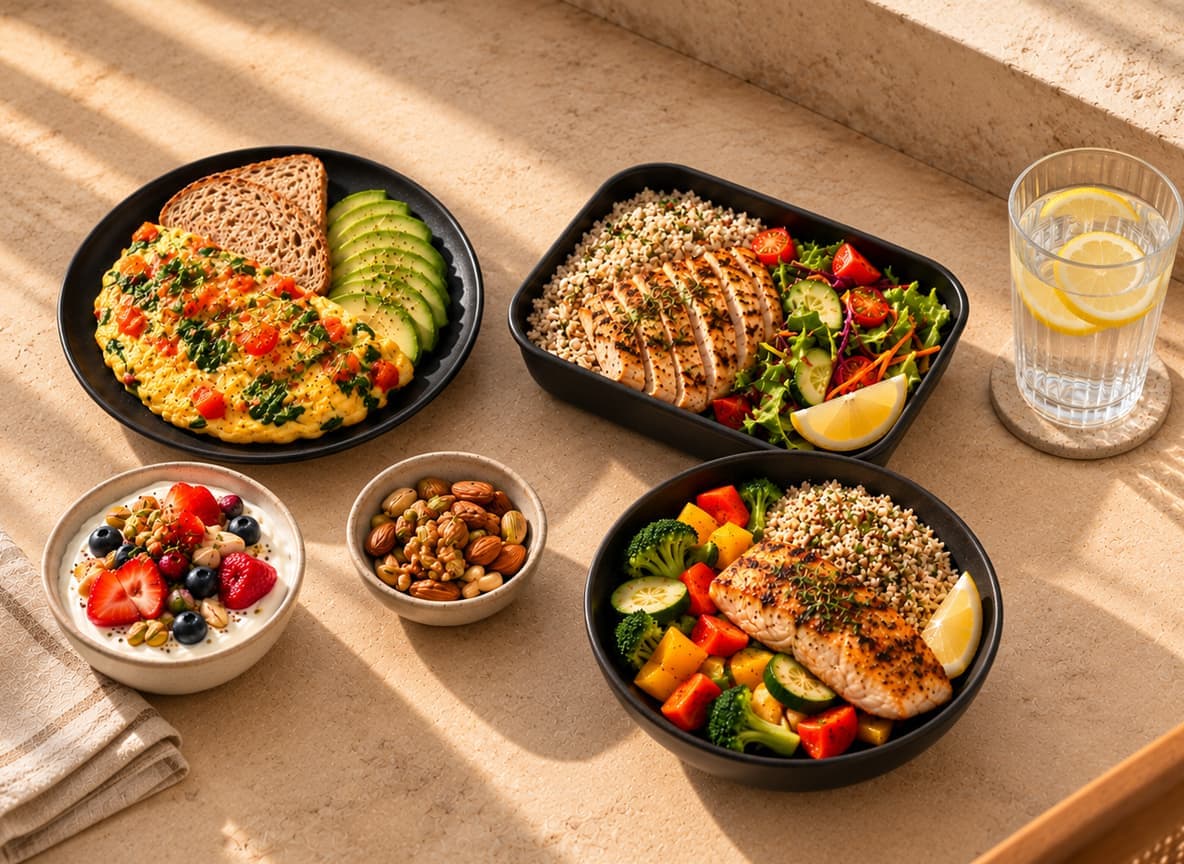
Your eating window should still look like a balanced day. Build each meal around protein, vegetables, a portion of wholegrains and some healthy fat, so you stay full until your next fasting period.
Protein at every meal: eggs, grilled chicken or fish, laban or Greek yogurt, lentils and beans. See .
Fiber: vegetables, salads, fruit, oats and pulses help you feel full.
Wholegrains in sensible portions: brown rice, wholegrain bread or bulgur.
Local favorites, mindfully: machboos or harees can fit, with a smaller portion of rice and extra salad. matters more than cutting out foods you love.
No feast when you break your fast: a large, rushed first meal can undo the calorie gap you created.
A sample 14:10 day
If your window is 9:00 to 19:00, your day could look like this: breakfast at 9:00 (eggs, wholegrain bread, cucumber and tomato), a morning snack (fruit with a handful of nuts), lunch at 13:30 (grilled fish, rice and salad), an evening snack (yogurt) and dinner before 19:00 (chicken, vegetables and lentil soup).
What can you drink while fasting?
During fasting hours, stick to drinks with no calories: water, black coffee and unsweetened tea. Juice, milk, smoothies, soft drinks and karak with milk and sugar all contain calories and break the fast.
Qatar's heat makes hydration especially important. Drink water regularly throughout the day, and take extra care if you work or exercise outdoors. If fasting leaves you lightheaded on hot days, shorten your fasting window or stop and seek advice.
Who should not try intermittent fasting?
Intermittent fasting is not suitable for everyone. According to the British Heart Foundation, Harvard's Nutrition Source and Mayo Clinic, avoid it, or only try it with medical supervision, if you:
have diabetes, experience low blood sugar or take medication that must be taken with food
are pregnant or breastfeeding
have or have had an eating disorder
are under 18 or underweight
are at high risk of bone loss and falls
have kidney, heart or other ongoing health conditions
Common side effects include hunger, tiredness, dizziness, headaches and irritability, especially in the first weeks. If they don't settle, intermittent fasting may not be the right approach for you, and that is fine: other eating patterns can work just as well.
Intermittent fasting with a meal plan in Qatar
The hardest part of intermittent fasting is often deciding what to eat when your window opens. Balanced, ready-portioned meals make it easier to avoid grabbing whatever is quickest.
Dieture meal plans can include breakfast, lunch, dinner, a morning snack and an evening snack, so you can choose the meals that fit your eating window. Each plan offers 300+ dishes every month, and the menu changes monthly with new dishes added. Explore or browse to see what fits your schedule.
Key takeaways
Intermittent fasting means eating within a set time window; it changes when you eat, not what you eat.
12:12 is the easiest starting point, 14:10 suits many people, and 16:8 and 5:2 are more demanding.
Research shows similar weight loss to a continuous calorie-controlled diet, so choose the approach you can sustain.
Fill your eating window with protein, fiber and balanced portions, and drink water regularly in Qatar's heat.
Speak to a doctor first if you have diabetes, take medication, are pregnant or have a history of eating disorders.
Intermittent fasting can be a useful structure for some people in Qatar, but it is a tool, not a requirement. Start slowly, eat well within your window and choose the routine that fits your health, work and family life.