Overcoming Hunger and Cravings on the Keto Diet During Ramadan
Why Hunger Feels Stronger During Ramadan
Hunger during Ramadan isn’t just about food restriction. It’s influenced by:
Blood sugar fluctuations
Dehydration
Ghrelin (hunger hormone) patterns
Habit-based cravings at Iftar
Research shows that ghrelin levels rise predictably around habitual meal times, increasing perceived hunger - even if your body doesn’t physiologically require energy at that moment (Cummings et al., 2001).
This is why cravings often spike right at Iftar.
Why Keto Can Help With Ramadan Fasting
A well-formulated ketogenic diet:
Reduces insulin spikes
Improves fat adaptation
Stabilizes blood sugar
Lower carbohydrate intake reduces glycemic variability, which helps reduce hunger swings (Hallberg et al., 2018).
Additionally, ketosis increases satiety through ketone production and fat metabolism, potentially reducing appetite overall ().
Overcoming Hunger and Cravings on the Keto Diet During Ramadan | Dieture
Sumithran et al., 2013
When keto is structured properly, many people report:
More stable energy
Fewer intense cravings
Better control during Iftar
How to Reduce Hunger During Ramadan on Keto
1. Optimize Suhoor for Slow Release Energy
Your Suhoor meal during Ramadan determines how manageable your fast will feel.
What to include:
High-quality fats (avocado, olive oil, nuts)
Moderate protein (eggs, salmon, chicken)
Low-carb fiber (chia seeds, leafy greens)
Electrolytes (salt, potassium-rich foods)
High-protein meals increase satiety hormones like peptide YY and GLP-1 (Leidy et al., 2015).
Fiber slows gastric emptying and improves fullness.
Avoid at Suhoor:
High-carb foods (even “healthy” ones)
Sugary drinks
Refined starches
These cause insulin spikes followed by crashes - leading to stronger hunger midday.
2. Manage Dehydration (It Feels Like Hunger)
Many people who feel “hungry during Ramadan” are actually mildly dehydrated.
Dehydration increases fatigue and perceived appetite signals.
Studies show fluid restriction affects cognitive performance and increases fatigue (Ganio et al., 2011).
Between Iftar and Suhoor:
Prioritize water intake
Add electrolytes (especially sodium)
Avoid excessive caffeine
On keto, sodium requirements increase due to reduced insulin levels and increased sodium excretion.
3. Break Your Fast Strategically at Iftar
Cravings at Iftar are often psychological + blood sugar-driven.
Instead of breaking your fast with sweets or refined carbs:
Step 1: Break with:
Water
A small portion of healthy fats or protein
Low-carb vegetables
Step 2: Wait 10–15 minutes
Allow satiety signals to activate before eating a full meal. Research shows eating protein first can reduce total calorie intake in the meal (Jakubowicz et al., 2013).
4. Control Ramadan Cravings on Keto
Cravings during Ramadan often come from:
Emotional eating patterns
Cultural food cues
Blood sugar fluctuations
Sleep deprivation
Sleep restriction increases ghrelin and reduces leptin (satiety hormone), increasing appetite (Spiegel et al., 2004).
To reduce cravings:
Prioritize 7–8 hours of sleep
Keep protein consistent
Don’t under-eat fats at Suhoor
Avoid “keto desserts” as a trigger habit
Ideal Keto Iftar and Suhoor Meals for Ramadan
Suhoor (Pre-Dawn Meal)
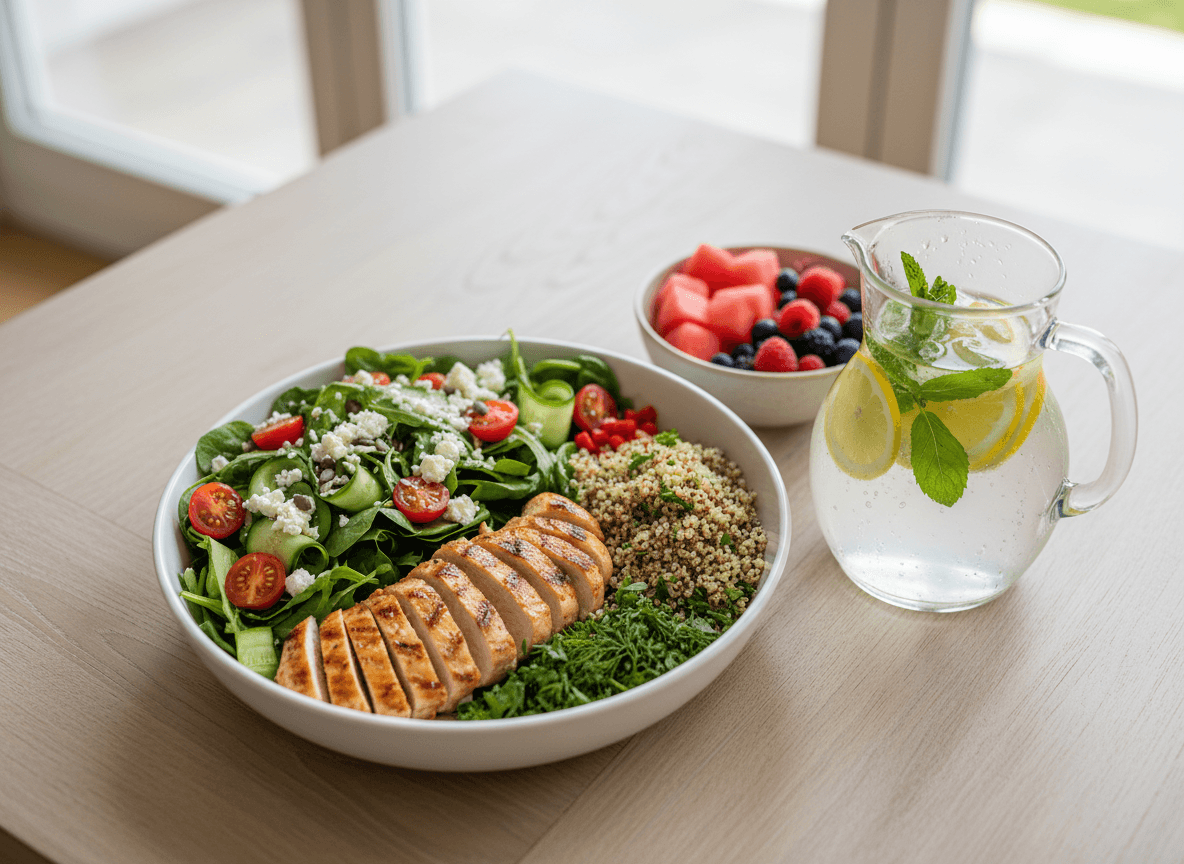
Eggs cooked in olive oil
Avocado + nuts
Grilled chicken or salmon
Chia pudding with unsweetened almond milk
Leafy green salad with olive oil
Goal: High fat + moderate protein + fiber + electrolytes.
Iftar (Sunset Meal)
Water + light starter (broth or protein portion)
Grilled meat/fish
Non-starchy vegetables
Olive oil-based dressing
Small portion of nuts if needed
Goal: Gradual satiety, not a blood sugar spike.
Common Mistakes on Keto During Ramadan
Eating too little at Suhoor
Overeating at Iftar
Neglecting electrolytes
Using “keto sweets” daily
Not adjusting workout intensity
Final Thoughts
If you’re wondering:
“Why am I so hungry during Ramadan?”
“How do I control Ramadan cravings?”
“What’s the best diet during Ramadan?”
“What should I eat at Iftar and Suhoor on keto?”
The answer isn’t more restriction - it’s better structure. Ramadan is about discipline, reflection, and intentional living.
Your nutrition should support that - not fight it.
If you’re following a structured keto plan, ensure it’s:
Dietitian-guided
Nutritionally balanced
Sustainable for fasting periods
Because it’s not about extreme dieting - it’s about supporting your body while honoring the fast.